- 1Fear is a survival tool, not a success strategy — it was built to keep you alive, not to help you grow.
- 2Most of the fear stopping you today isn't protecting your body. It's protecting your ego from embarrassment, rejection, or failure.
- 3You don't need to eliminate fear to act — you need a system that acts despite it.
- 4The smallest possible version of the next step is almost always small enough to survive the fear.
- 5Every time you act while afraid and survive it, the fear gets a little quieter and a little less believable.
Fear Makes You Live, But It Won't Make You Succeed
Fear has one job: keep you alive until tomorrow. It was never built to help you have a better tomorrow. That job belongs to you.
You know the feeling.
The cursor blinking in an empty email you've rewritten four times. The business idea sitting in your notes app for eight months. The conversation you keep rehearsing in the shower but never have. The application you almost submitted, then closed the tab.
You tell yourself you're being careful. Realistic. Waiting for the right moment.
Underneath that explanation, though, you already know the truth: you're afraid, and the fear is winning — not because it's right, but because it's loud.
Here's the idea this article is built around: fear makes you live, but it doesn't make you succeed. It's an excellent tool for survival and a poor tool for growth. Once you see why, you can stop mistaking one for the other — and start learning how to overcome fear and succeed instead of just staying safe.
In this article:
- Why Fear Feels So Convincing
- The Fear That Protects You vs. The Fear That Limits You
- The Cost of Letting Fear Drive
- How to Act Despite Fear: A Practical Framework
- What Real Growth Actually Looks Like
- Frequently Asked Questions
I know this one from the inside, not just as a theory.
In late 2025, I had a freelance pitch sitting in my drafts folder for eleven days. A small studio had mentioned, almost in passing, that they needed someone to rebuild their booking flow. I had the exact skills for it. I wrote the pitch email in twenty minutes, then read it back and found four reasons not to send it: too forward, too expensive, too likely to get ignored, too likely to get a reply that started with "thanks, but."
I finally sent it at 11:40pm on a Sunday, mostly because I'd grown more tired of thinking about it than afraid of the outcome. The reply came back in under two hours. They said yes before I'd finished my coffee the next morning. The project paid more than I'd quoted, because I'd underpriced it out of the same fear that had delayed the email in the first place.
Nothing about those eleven days of hesitation made the email better. It just delayed the version of me who already knew what to say.
Why Fear Feels So Convincing
Fear isn't a character flaw. It's old hardware doing exactly what it evolved to do.
For most of human history, the people who survived were the ones who froze at a rustle in the grass, avoided the unfamiliar path, and didn't take unnecessary risks. Fear was correct far more often than it was wrong, because being wrong could cost a life.
That's the part worth sitting with: fear was calibrated for a world where most risks could kill you. It was never recalibrated for a world where most risks just mean discomfort.
The "threats" you're likely facing today rarely involve survival at all:
- Sending a pitch that might get rejected
- Starting a business that might not work
- Speaking up in a meeting where you might be wrong
- Asking someone out and possibly hearing no
- Leaving a stable job for an uncertain one
None of these will kill you, but your nervous system doesn't know that. It floods you with the same signals it would use to stop you from walking off a cliff — a racing heart, a tight chest, a mental list of every reason to stop.
Researchers studying a closely related pattern — self-sabotage at the point of achieving a goal — have found it shows up specifically when people are close to success, not just when they're facing failure, often paired with lowered self-esteem and a reluctance to own one's own competence. Psychologist Abraham Maslow called this the "Jonah Complex": the tendency to shrink from your own potential because growth itself feels destabilizing. It's a useful reminder that this isn't a personal weakness — it's a documented, common pattern.
The Fear That Protects You vs. The Fear That Limits You
Not all fear deserves to be ignored. Some of it is still doing its original job.
Protective fear responds to real, immediate danger — physical harm or situations with genuinely irreversible consequences. Listen to this one.
Limiting fear responds to social and emotional risk: embarrassment, rejection, judgment, the possibility of failing at something that matters to you. This kind protects your ego, not your life — and it's quietly running most people's decisions.
A simple test: ask what the worst realistic outcome actually is. If the honest answer is "I'd feel embarrassed" or "it might not work and I'd have to try something else," that's limiting fear. If the honest answer involves real, lasting harm, that's protective fear doing its job.
Most of what stands between you and the thing you want falls into the first category. It rarely feels that way in the moment, because fear doesn't announce which type it is — it just shows up and says stop.
The Cost of Letting Fear Drive
Here's what rarely gets said directly: staying safe has a price too. It's just a quieter one, paid slowly, over years instead of moments.
Every time the comfortable option wins because the uncomfortable one felt too risky, the cost isn't avoided — it's deferred. It tends to resurface as:
- The job you're still in, five years after you knew it wasn't right
- The skill you never developed because starting felt too exposed
- The version of yourself who never found out what they were actually capable of
Fear is excellent at making the next five minutes of discomfort feel like the biggest risk in the room. It's much worse at accounting for the compounding cost of never trying. A single rejected pitch stings for a day. A decade of pitches never sent can cost an entire career.
This is the tension at the center of all of it: fear optimizes for how you feel in the next five minutes, while success requires optimizing for who you become over the next five years. Those two timelines rarely agree — and fear always votes for the shorter one.
How to Act Despite Fear: A Practical Framework
Eliminating fear before acting isn't realistic for most people, including those who look fearless from the outside. What actually helps is a system that lets you act with the fear still present.
1. Name the fear specifically
Vague fear is powerful. Specific fear is manageable.
"I'm scared to start" is vague, and it can attach itself to everything. "I'm scared that if I launch this and nobody buys it, it means I'm not good enough" is specific — and specific fears can be examined, questioned, and often shown to be exaggerated.
Write down the actual sentence your fear is saying, not just the feeling behind it. This alone often shrinks it.
2. Ask what it's actually protecting
Once the fear is specific, ask: is this protecting my safety, or my ego?
If it's your ego, you can proceed. Discomfort to your ego isn't the same category of risk as danger to your life, even though the body reacts to both the same way.
3. Shrink the step until the fear can't justify stopping you
Fear thrives on big, undefined moves. "Start a business" is terrifying. "Write down three possible names for the business" isn't.
Take whatever you're avoiding and cut it down until the next action feels almost boringly small:
- Instead of "have the difficult conversation," start with "write the first sentence of what I want to say"
- Instead of "apply for the job," start with "update one line on the resume"
- Instead of "launch the project," start with "tell one person the idea out loud"
Small steps don't register as a threat to fear, so it doesn't fight them as hard — and momentum, once started, is far easier to continue than to begin.
4. Set a decision window
Fear grows the longer a decision sits unresolved. Give yourself a short, specific window to act — an hour, a day, before you sleep tonight — instead of an open-ended "eventually."
A deadline, even a self-imposed one, forces a choice before fear has time to build its full case.
5. Act, then evaluate the evidence afterward
This is the step most people skip. After acting — sending the message, having the conversation, submitting the application — go back and check: did the feared outcome actually happen? Was it as bad as predicted?
Almost always, the answer is no. Each time that evidence gets collected, the fear loses a little credibility for the next decision. This is how courage actually gets built — not as a fixed personality trait, but as a track record assembled one small proof at a time.
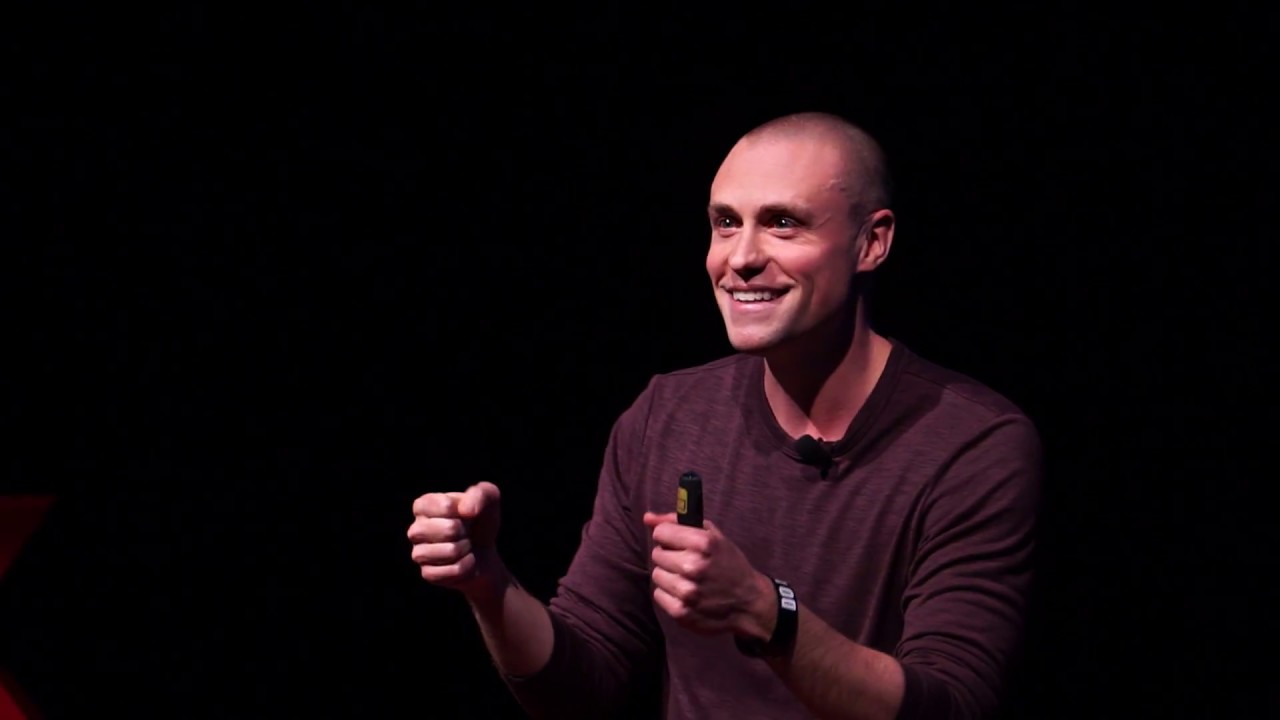
If you'd rather hear this one talked through, here's a talk that digs into the same idea — what fear is actually for, and where it gets in the way of growth:
What Real Growth Actually Looks Like
People who build something meaningful rarely do it because the fear disappeared first. They do it by building a habit of moving while afraid, in small enough steps that the fear couldn't stop them completely.
In practice, this looks less like a dramatic leap and more like:
- Sending the message before it's been rehearsed to perfection
- Publishing the work before feeling fully ready
- Asking the question that risks looking inexperienced
- Starting at a smaller scale than originally imagined, just to start
None of this requires fearlessness. It requires a decision to let the step happen anyway.
Over time, this compounds. The version of you who sends one uncomfortable email becomes the version who has a harder conversation the next month, which becomes the version who takes the bigger risk the year after. Growth isn't one act of bravery — it's a long series of smaller ones, stacked.
The One Thing to Do Today
If one idea is worth keeping from this, it's this: stop waiting for the fear to leave before acting. For most people, it doesn't leave first — it leaves afterward, as evidence accumulates that the thing it warned about was survivable.
If you're still wondering how to overcome fear and succeed in practice, the answer is rarely a mindset shift you feel all at once — it's the small, repeated evidence you collect by acting anyway. Pick the one thing that's been avoided. Not the biggest version of it — the smallest possible version. Do that today.
Not because the fear disappears. But because fear was only ever meant to keep you alive long enough to get here. What happens next is yours to decide.
I still think about those eleven days in the drafts folder more often than I'd like to admit. Not because the story is dramatic — it isn't. It's mundane, which is exactly the point. Most of what fear costs isn't one big dramatic failure. It's eleven ordinary days, then another eleven, then a year of ordinary days that quietly added up to nothing sent.
Frequently Asked Questions
Why does fear stop people from succeeding even when they want to?
Fear evolved as a survival mechanism to avoid loss, not to identify opportunity. Related research on self-sabotage near the point of achievement — sometimes called the fear of success — shows the nervous system reacting to a business risk or hard conversation the same way it would to a physical threat, even though neither is life-threatening.
What is the difference between healthy fear and limiting fear?
Healthy fear responds to real, immediate physical danger and protects your body. Limiting fear responds to social or emotional risk and protects your ego, not your safety. The test: if the worst outcome is temporary discomfort rather than real harm, it's limiting fear.
How do you take action when you're still afraid?
Don't wait for the fear to disappear before acting — it typically fades afterward, not before. Shrink the decision to its smallest possible version, set a short time limit for hesitation, and commit to acting before the fear builds a full case against you.
Can fear ever be useful for achieving goals?
Yes. A baseline level of fear sharpens focus, increases caution before high-stakes decisions, and signals that something genuinely matters to you. The goal is to stop letting it cast the only vote, not to eliminate it entirely.
What's a simple daily habit to build resilience against fear?
Do one small uncomfortable thing on purpose each day — send the message you've been drafting, ask the question in the meeting, make the call. Resilience is built by repeatedly proving to yourself that discomfort doesn't destroy you, not by waiting for one big moment of courage.
Related reading:
- Salary Is a Drug: Why the Paycheck That Saves You Is Also the One Trapping You
- I'm Building Someone Else's Dream — But My Mind is Already Designing My Own Kingdom
- My First Project Failed Quietly. Here's What It Taught Me.
- Stop Comparing Your Chapter 1 to Someone Else's Chapter 10
If this resonated, share it with someone who's sitting on an idea, a message, or a decision they haven't made yet. Sometimes the push someone needs is just a reminder that the fear isn't as accurate as it sounds.
Did you find this helpful?