- 1Gemini doesn't just write a script anymore — inside Google Vids it can turn that script into a scene-by-scene storyboard with stock footage, voiceover, and an AI avatar, which is the part most 'Gemini script writing' tutorials skip.
- 2The free tier is genuinely usable for scripting: unlimited Gemini 3.6 Flash, a daily allotment of Gemini 3.1 Pro, and Gemini Live voice mode, all with no credit card required.
- 3A detail almost nobody covers: Google's original Gemini CLI — the tool many developers script automations with — reaches end-of-life on June 18, 2026, replaced by Antigravity CLI as part of what Google calls Agentic 2.0.
- 4For developers, Gemini's 'Help me script' feature inside Google Apps Script writes working automation code from a plain-English description, no JavaScript experience required.
- 5For videographers, Gemini Omni (which replaced the standalone Veo 3.1 model inside the Gemini app) can take a script and generate an animated, narrated scene from a single prompt — but it currently requires a paid AI Plus, Pro, or Ultra plan.
- 6The single biggest weakness reported by regular users is consistency: Gemini's creative writing can default to a generic tone unless you actively constrain it with style rules and examples.
Gemini AI as a Script Writer in 2026: The Overlooked Features, Real Pros & Cons, and How to Use It Free
Published: August 22, 2026 · 11 min read · By Veeresh Bashetti
Why Most "Gemini Script Writer" Guides Only Tell You Half the Story
Type "Gemini AI script writer" or "YouTube script generator" into any search engine and you'll get a dozen guides that all say the same thing: open Gemini, type a prompt, get a YouTube script back. That's true, but it's also the least interesting part of what's actually happening inside Google's AI stack in 2026.
What most of those guides skip is that the script is no longer the finish line. <cite index="43-1">Gemini inside Google Vids now suggests a script for every individual scene, so the writing step and the storyboard step have effectively merged into one workflow</cite>. On the developer side, <cite index="11-1">Google quietly confirmed that the original Gemini CLI — the command-line tool a lot of developers script automations with — reaches end-of-life on June 18, 2026, replaced by a new tool called Antigravity CLI as part of what Google calls Agentic 2.0</cite>, and that detail has real consequences if you've built anything on top of the old tool.
This guide covers the whole picture: what Gemini actually does as an AI script generator today, the honest pros and cons after real use, exactly how to access it for free, and how Google Gemini for YouTube creators and developers specifically fits into a real production or engineering workflow.
Quick Comparison: Free vs. Paid for Script & Video Work
| Feature | Free Tier | AI Plus ($4.99/mo) | AI Pro ($19.99/mo) |
|---|---|---|---|
| Chat model | <cite index="33-1">Gemini 3.6 Flash, unlimited</cite> | Gemini 3.6 Flash + more 3.1 Pro | Full Gemini 3.1 Pro access |
| Reasoning model access | <cite index="33-1">Daily allotment of Gemini 3.1 Pro</cite> | <cite index="33-1">~2x free-tier limits, 128K context</cite> | <cite index="27-1">1M-token context window</cite> |
| Deep Research reports | <cite index="34-1">Up to 5 per month</cite> | Entry-level Deep Research | <cite index="35-1">Full Deep Research</cite> |
| Video generation | ⚠️ Very limited / none | <cite index="33-1">Veo 3.1 Fast, short clips</cite> | <cite index="27-1">Veo 3.1, larger allotment</cite> |
| Script-to-scene (Vids) | Text script only | Basic storyboard | <cite index="41-1">Full Vids access, Veo 3.1 Lite trial</cite> |
| Voice mode | <cite index="34-1">Gemini Live included</cite> | Included | Included, higher limits |
| Storage | 15 GB (standard Google One) | <cite index="31-1">400 GB</cite> | <cite index="27-1">5 TB</cite> |
| Credit card required | ❌ No | ✅ Yes | ✅ Yes |
Pricing and limits change often on Google's side — always cross-check against gemini.google/subscriptions before you commit to a workflow.
Watch: Writing a Real YouTube Script with Gemini
What Gemini Actually Does as an AI Script Generator in 2026
1. Plain conversational scripting
The baseline everyone knows: describe your video, podcast, or presentation, and Gemini drafts a script with a hook, body, and call to action. It's genuinely fast — most people can go from a blank idea to a workable first draft in a couple of minutes instead of an afternoon.
2. Scene-by-scene scripting inside Google Vids
This is the part that separates Gemini from a plain chatbot. <cite index="45-1">Inside Google Vids, "Help me create" takes a prompt — and you can type "@" to pull in related documents — then generates a suggested outline with scenes already populated with text, stock media, and a voiceover script</cite>. <cite index="49-1">You can even import an existing slide deck, where each slide becomes a scene and the speaker notes become that scene's script automatically</cite> — a genuinely useful shortcut if you already have a presentation and just need it turned into a narrated video.
3. Script-to-video with Gemini Omni
Once a script exists, <cite index="61-1">Gemini Omni — the multimodal model that replaced the standalone Veo 3.1 model inside the Gemini app — can turn that script into an animated, narrated scene through natural conversation rather than a traditional timeline editor</cite>. <cite index="1-1">Vids' AI avatars can also turn a script directly into a digital presenter, so you can storyboard slides or generate a spoken script without ever being on camera</cite>.
4. Script-driven automation (the developer angle)
"Script" means something different to a developer, and Gemini covers that too. <cite index="1-1">Google's "Help me script" feature inside Apps Script lets you describe an automation in plain English — for example, checking Gmail for a specific label, saving attachments to Drive, and logging details to a spreadsheet — and Gemini writes the working code for you, no JavaScript experience required</cite>.
The Overlooked Feature: Your Gemini CLI Scripts May Stop Working
If you're a developer who has automated anything with the original Gemini CLI, this is the one detail worth stopping for. <cite index="11-1">Google confirmed the original Gemini CLI reaches end-of-life on June 18, 2026, and per Google's own migration guidance, any automation, CI/CD pipeline, or script still pointed at the old CLI after that date will simply stop functioning</cite>. <cite index="11-1">Individual users are affected on that June 18 timeline specifically, while enterprise and Google Cloud customers may follow a separate schedule tied to their own licensing agreements</cite>. It's being replaced by Antigravity CLI, and if any part of your workflow — content pipeline, deployment script, or scheduled task — still calls the old CLI, it's worth checking your migration path now rather than after something quietly breaks.
Honest Pros and Cons After Real Use
Pros
- Genuinely useful free tier. <cite index="33-1">Unlimited Gemini 3.6 Flash plus a daily allotment of Gemini 3.1 Pro</cite> is enough for real scriptwriting work without paying anything.
- Context awareness. Gemini can pull in your Drive files, an existing Slides deck, or a PDF and write a script grounded in that material instead of a generic prompt-only draft.
- One tool, whole pipeline. Script, storyboard, voiceover, and rough video generation now sit inside one connected workflow (Gemini → Vids → Omni) instead of three separate apps.
- Massive context window. <cite index="2-1">Gemini 2.5 Pro on the AI Pro plan supports up to 2 million tokens of context — roughly 1.5 million words</cite> — useful for scripting a long series against a full show bible or brand guide in one go.
- Multimodal input. <cite index="13-1">The Gemini API generates text output from text, image, video, and audio inputs</cite>, so it can write a script informed by an actual reference video or image, not just a written description.
Cons
- Generic tone by default. <cite index="9-1">Gemini's creative nuance is good but sometimes struggles with highly specific or subtle stylistic demands, occasionally defaulting to a more generic tone</cite> unless you actively constrain it.
- Video generation is paid-only in practice. <cite index="34-1">The free tier's video and image generation is capped at a low daily allowance</cite>, so turning a script into an actual video generally means upgrading.
- Tooling churn. The Gemini CLI replacement is a clear example — developers who script around Google's AI tools need to watch for these transitions more closely than with a more stable competitor.
- Pricing that keeps moving. <cite index="33-1">Google restructured and repriced its plans more than once in 2026</cite>, so guides (including this one) need to be checked against the live pricing page rather than trusted at face value months later — the same compute economics driving why AI tools cost what they do in 2026 explain why the free tier stops at text and stalls on video.
- Niche technical writing is inconsistent. <cite index="9-1">For very specialized or newer coding libraries, Gemini's coding assistance can be less accurate than models trained on broader, more diverse codebases</cite> — relevant if your "script" is closer to a build script than a video script.
How to Get Gemini AI Free (No Credit Card Needed)
- Go to gemini.google.com and sign in with any Google account. <cite index="23-1">Gemini is free with just a Google account — no credit card and no trial required</cite>.
- Confirm what you're actually getting. <cite index="31-1">The free tier includes Gemini 3.6 Flash for general chat, a daily allotment of Gemini 3.1 Pro for harder reasoning, image generation with Nano Banana 2, up to five Deep Research reports per month, and Gemini Live voice mode — all on the standard 15 GB of Google One storage</cite>.
- Check if you qualify for a free year of a paid plan as a student. <cite index="38-1">Starting August 20, 2026, eligible college students in the US can claim a full year of Google AI Pro at no cost, while students in 140+ other countries get a year of Google AI Plus</cite>, through the new student hub with study notebooks and flashcards. <cite index="25-1">A valid payment method is still required at sign-up for identity verification, even though the charge is $0 for the offer period, and the plan auto-renews at full price once the year ends unless you cancel</cite>.
- Use the free-tier developer API for prototyping. <cite index="33-1">The Gemini API gives free, rate-limited access to most models through Google AI Studio with no credit card, though free-tier traffic can be used to improve Google's products — fine for prototyping, not for anything confidential</cite>.
- Only upgrade once you hit a real wall. Most casual and even semi-serious scriptwriting use cases never need to leave the free tier — treat AI Plus or Pro as something to add once video generation or Deep Research limits actually become the bottleneck.
How Gemini Helps Developers (Beyond Just Writing Code)
Gemini's usefulness to developers goes well past autocomplete:
- Apps Script automation without learning syntax. <cite index="1-1">"Help me script" lets you describe an automation in plain English and Gemini writes the Apps Script code, connecting Gmail, Sheets, Docs, and Drive in ways off-the-shelf tools can't</cite> — and <cite index="10-1">it can also make changes to existing code and give context-aware explanations directly from your execution logs when something breaks, rather than making you guess</cite>.
- In-IDE assistance. <cite index="16-1">Gemini Code Assist provides smart actions for frequent developer tasks like test generation and code explanation, plus full agent-mode support across the software development lifecycle with human-in-the-loop oversight</cite>.
- A genuinely large context window for big codebases. <cite index="6-1">Gemini can bring in entire scripts or repositories, using its context window to analyze complex codebases for bugs or refactor suggestions</cite>.
- Terminal-native agentic help. <cite index="19-1">Gemini CLI (soon Antigravity CLI) supports code understanding, file manipulation, command execution, and dynamic troubleshooting directly from the terminal, with MCP support for custom integrations</cite>.
- Enterprise-grade reliability incoming. <cite index="10-1">Apps Script is moving to a Google Workspace Core Service starting in June 2026, meaning custom scripts will run on the same reliability, security, and compliance standards as the rest of Workspace</cite> — a meaningful shift for teams running production automations on it. If tooling like this has you weighing a shift toward AI-focused engineering work, it's worth reading how that career path actually holds up against the GenAI developer hype for 2026 before committing to it.
How Gemini Helps Videographers and Content Creators
For anyone producing video — solo creators, marketing teams, or full production houses — the script-to-screen pipeline is where Gemini has changed the most in 2026:
- Script generation grounded in your own material. Rather than a blind prompt, Vids' "Help me create" <cite index="45-1">can pull in related documents through the "@" command and generate an outline with scene-by-scene text, relevant stock media, and a full voiceover</cite>.
- From script straight to an AI presenter. <cite index="5-1">Vids' AI avatars let you turn a script into a digital presenter automatically, storyboarding slides or generating a spoken script without repeated filming</cite>.
- Editing existing footage with plain text. <cite index="5-1">Gemini Omni Flash in Vids lets you edit any video footage — phone video, AI clips, anything — using simple text prompts</cite>, which is a real time-saver for re-cutting or repurposing existing footage instead of reshooting.
- Best-in-class text-to-video quality. <cite index="2-1">Veo 3 generates photorealistic video with native audio from text prompts and is currently considered the highest-quality text-to-video model available, ideal for marketers, filmmakers, and content creators who need cinematic AI video</cite>.
- Fast iteration on short-form content. <cite index="48-1">Gemini Omni's video generation is directly usable inside YouTube Shorts and the YouTube Create app</cite>, letting creators go from a written hook to a rough animated clip without leaving the platform they're publishing to.
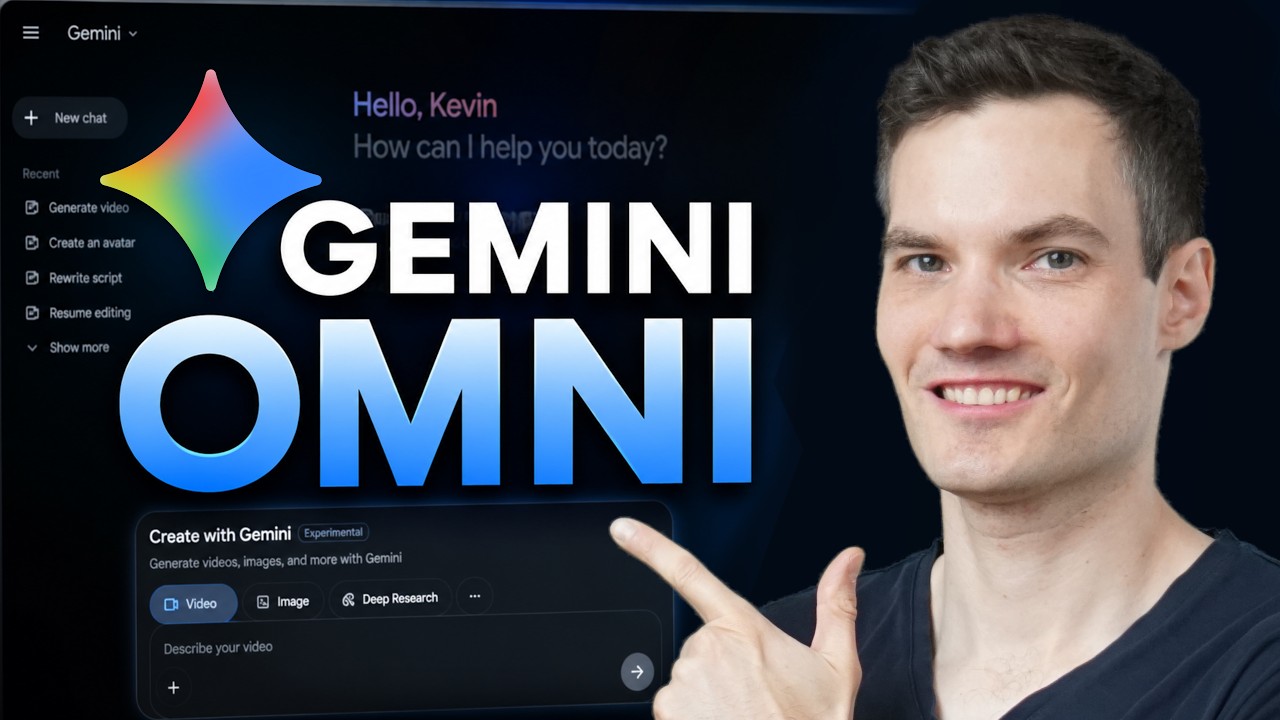
Watch: The Gemini AI Video Workflow — Turning a Prompt Into an Actual Video
Should You Actually Rely on Gemini as Your Script Writer?
If your work lives inside Google's ecosystem — Docs, Slides, Drive, or you're already publishing to YouTube — Gemini's real advantage isn't raw writing quality, it's that the script never has to leave the pipeline. It moves from idea to outline to storyboard to a rough video without you exporting a single file. <cite index="9-1">If your workflow involves integrating and understanding information across video, images, documents, and text together, Gemini's multimodal capabilities are a genuine step forward</cite>. If you mainly need polished, highly specific creative prose with a very particular voice, expect to spend more time constraining the output with your own examples and a fixed beat outline rather than an open-ended prompt.
The short version: if you're already using Google Docs, Drive, and YouTube, Gemini removes several manual steps from your workflow — the script, the outline, and the storyboard stop being three separate files. If you're chasing cinematic, upload-ready AI video, budget for a paid plan, since that piece of the pipeline isn't meaningfully free yet. But for scripting alone, the free tier holds up better than most guides give it credit for — it's worth the ten minutes it takes to try it against whatever tool you're using now.
More Useful Resources
- More AI Tools Articles — everything I write on AI tools that actually change how you work
- 9 AI Tools That Are Actually 100% Free for Developers in 2026 — the free-tier mindset from this Gemini guide, applied across nine other tools
- How I Actually Use AI Every Day as a Developer — where Gemini and similar tools genuinely save time in a real workday, and where they don't
- 8 AI Prompts Every Smart Marketer Should Have Saved in 2026 — reusable prompt structures that work well with Gemini's scripting workflow, not just one-off tricks
- GenAI Developer in 2026: Real Career Wave or Just LinkedIn Hype? — if tools like Gemini's Code Assist and Apps Script integration have you thinking about a GenAI-focused career path
- Why Are AI Tools So Costly in 2026? — the compute economics behind why Gemini's free tier is generous but its video generation isn't
- 18 Free Websites That Feel Illegal to Know (But Are 100% Legal) — more genuinely free, no-catch tools in the same spirit as this guide's free-tier breakdown
This guide was fact-checked against Google's own product and pricing pages, Google's official blog, and independent 2026 pricing trackers as of August 22, 2026. Google updates Gemini's plans, limits, and tool names often — if you spot a detail that's since changed, let me know in the comments and I'll update it. If you've run your own timed tests with Gemini's scripting or Vids workflow, send them over — real before/after examples are the next update this post needs.
Did you find this helpful?
FAQ