- 1The comparison feed is not real life — you are watching an edited highlight reel made by someone who is also doing the same comparison you are.
- 2Comparison-driven anxiety produces a very specific response: purchases that feel like progress but change nothing real. Naming this mechanism is the first step to breaking it.
- 3The comparison never accounts for time. The gap you see between you and someone further ahead is mostly time — not talent, not hardware, not a fundamental difference in who you are.
- 4Audit who you follow and ask one question: does this make me more capable, or does it primarily make me feel behind? Be stricter than you expect to be.
- 5Before opening any social feed in an anxious state, ask: am I going here to learn something, or am I going here to measure myself? The answer changes everything.
Stop Comparing Yourself to People Online. It Is Costing You More Than You Think.
There's a specific feeling that social media produces in me when I'm not careful.
It's not exactly jealousy. It's not exactly insecurity. It's a subtle, persistent sense of wrongness about my own pace. A feeling that everyone else is further ahead, that I am somehow behind a schedule I never agreed to.
I used to think this was just a personal flaw — something I needed to work on. Then I started noticing the financial consequences. The purchases I made when that feeling was loudest. The money I spent trying to close a gap that was never real in the first place.
The comparison habit is not just a confidence problem. It is a money problem. And once you see the connection, you cannot unsee it.
The Comparison Feed Is Not Real Life
This sounds obvious. You've heard it. Everyone has.
But let me make it more specific, because the general version doesn't actually land.
When you scroll through developer Twitter, you are seeing:
- The project someone shipped, not the 11 projects they abandoned first
- The job offer someone posted about, not the 40 rejections before it
- The setup someone photographed, not the three months of credit card debt they used to build it
- The achievement someone announced, not the two years of invisible, unposted work that preceded it
You are watching a highlight reel that has been edited by someone who also feels the pressure to perform progress. The people whose content you're consuming are often doing the same comparison you are — looking at other people's feeds and feeling that low hum of "not enough."
You are comparing your internal experience — full of doubt and friction and slow days — to other people's external presentation. This comparison was never going to be fair.
How It Becomes a Financial Problem
Here's the mechanism I lived through, and that I've watched play out in friends too.
You consume aspirational content. Developer setup tours. "My life in a week" vlogs. Coding challenge completions. Income reports.
You start to feel the gap between where you are and where these people appear to be.
That gap produces anxiety. And anxiety produces a very specific kind of action: you look for something you can do right now to close it.
Purchases feel like action. They produce an immediate sensation of moving forward. You buy the course, the hardware, the subscription, the book — and for a brief moment, the gap feels smaller.
But it isn't smaller. The content keeps coming. The comparison keeps happening. The anxiety returns. And the cycle continues, with your bank account as the casualty.
This is exactly what happened to me before the Rs 13,000 CPU purchase. I had been spending hours in developer YouTube. The feeling of being behind had been building for weeks. The purchase was the release valve — an action that felt like catching up, while changing nothing real.
Understanding that mechanism was more valuable than any budgeting system I've tried. You cannot budget your way out of a psychological pattern you haven't identified.
What We're Actually Comparing
When you feel behind looking at someone's setup or project or career trajectory, what are you actually comparing?
In my experience: you are comparing your starting point to their current point. Your chapter one to their chapter seven. And the cruelty is that they started before you, built slowly and invisibly, and now their highlights are visible while their origin is not.
I think often about developers I look up to who are building real things, shipping consistently, working in companies I admire. They all started somewhere I would have found unimpressive. Broken projects. Basic setups. Slow early code. The gap I'm looking at between them and me is mostly time — not talent, not hardware, not some fundamental difference in capability.
The comparison doesn't account for time. And time is the one variable that is always on your side if you keep going.
The Cost Beyond Money
The financial cost of comparison-driven spending is real. But it is not the only cost.
Attention. Every hour spent watching other people build things is an hour not spent building your own. This is the most direct trade. It is not a trade most people consciously make — but it is the trade happening.
Clarity. When you consume a constant stream of other people's goals, aesthetics, and priorities, your own sense of what you actually want gets harder to access. You start wanting things because you saw someone else want them. You build toward destinations that were never really yours.
Confidence. The comparison habit consistently produces a distorted picture of your own progress. Real progress — the kind that happens slowly over months — becomes invisible to you because you are calibrated to the faster-appearing pace of social media.
What I Actually Changed
I want to give you concrete things, not just observations.
I audited who I was following and why.
For every account I spent significant time on, I asked: does engaging with this content make me more capable, more informed, or genuinely inspired? Or does it primarily make me feel behind?
I was stricter than I expected to be. Several accounts I "respected" were actually just producing anxiety without corresponding value. I unfollowed them without announcement.
I created separation between consuming and creating.
I don't open social media before I've done at least one hour of actual work. Not as a rule — as a protection. Starting the day with your own work before exposing yourself to comparison content means the comparison lands differently. You are more anchored in your own reality.
I practice noticing the feeling, not acting on it.
When I feel the comparison anxiety rising — that familiar "everyone is ahead of me" hum — I've learned to name it instead of respond to it. "I'm feeling behind." Not: "I need to buy a course, upgrade my setup, start a new project immediately." Just: naming the feeling without letting it drive a decision.
This is where the 30-day rule intersects. The rule creates space between the feeling and the action. And in that space, the feeling usually resolves on its own.
I follow for craft, not career.
There's a meaningful difference between following someone because watching their work teaches you something, and following them because their career trajectory makes you feel either inspired or inadequate.
Content that teaches you something specific — a technical approach, a thinking framework, a solved problem — has compound value. Content that mostly makes you feel like you're watching someone else's success has cost, not value.
The Question I Ask Myself Now
Before opening any social feed when I'm in an anxious state, I ask:
"Am I going here to learn something, or am I going here to measure myself?"
If it's the second one, I close the tab. Not forever. Not as a dramatic gesture. Just: not right now.
What I've found is that most of my social media usage, when I'm honest about it, was measurement, not learning. That insight alone has returned more time and attention to my actual work than any productivity system I've tried.
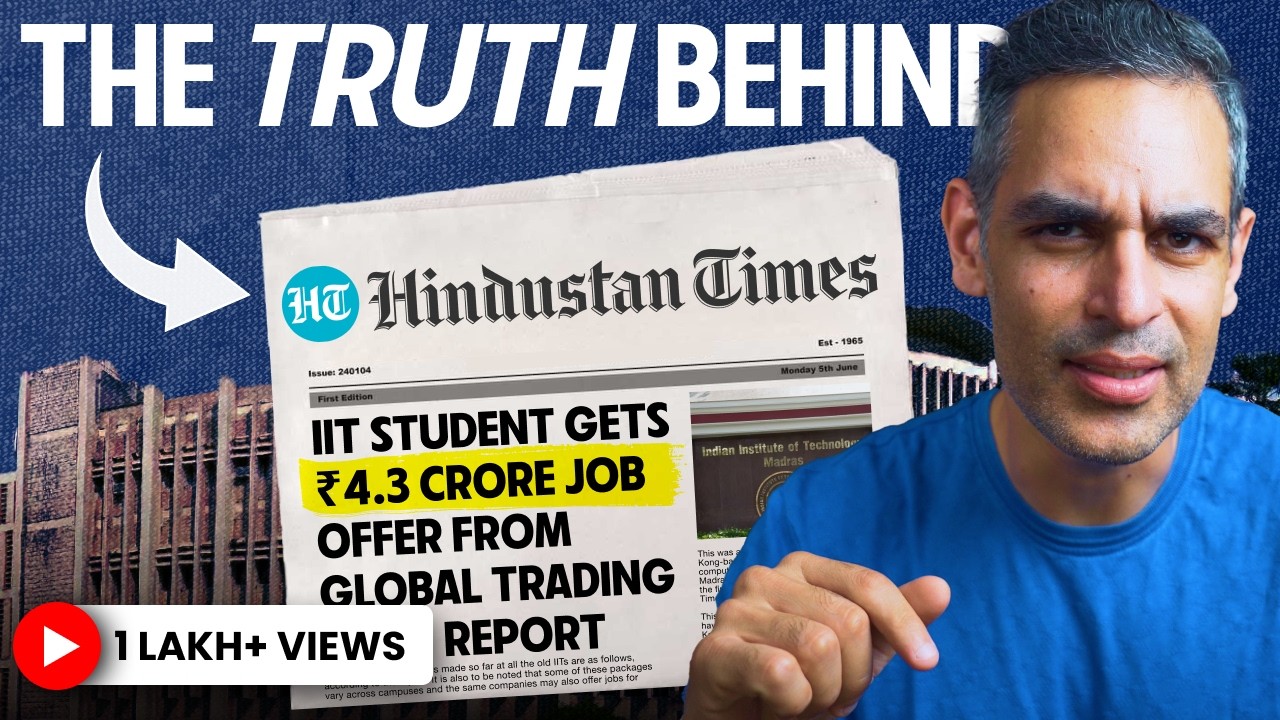
The comparison trap is especially dangerous when it attaches to salaries and career milestones — the kind of numbers that circulate on LinkedIn and college placement posts. Warikoo breaks down exactly why those numbers lie, what the real picture looks like, and what actually matters for long-term career success:
One More Thing
The people building real things are mostly not online about it.
The loudest voices in any community are usually the people most oriented toward performing their work rather than doing it. Real builders are often quiet. Working. Building without posting about every step.
The comparison you're making is almost certainly biased toward the most visible people — and visibility is not correlated with quality or progress in any meaningful way.
The work matters. The work is what you can actually control. Everything else is noise.
Related reading:
- I Spent Rs 13,000 of My Scholarship Money on a CPU — Here's What It Taught Me
- The Biggest Money Mistakes People Make in Their 20s
- The 30-Day Rule: The Only Spending Rule That Has Actually Changed My Habits
- What I Learned From Failing My First Real Project
- The Developer Setup Trap: Why Better Hardware Won't Make You a Better Developer
Did you find this helpful?
FAQ