- 1Trust is genuinely fragile. It takes years to build and can disappear in a moment.
- 2Healthy guilt is a teacher. Let it sit long enough to show you what it is pointing at, then let it point you forward.
- 3Accountability is where growth actually begins — not inspiration or motivation, but ownership.
- 4Forgiveness can change a person more deeply than punishment ever can.
- 5Your worst mistake is not your whole story. The chapters that come after carry more weight than people usually realise.
The Childhood Mistake That Changed My Life — A True Story of Guilt, Forgiveness and Growth
Some memories never fade. No matter how much you grow, earn, achieve, or change — they sit there, vivid and heavy, somewhere behind everything else you do.
Published: June 3, 2026 · 7 min read · By Veeresh Bashetti
For me, that memory is from a mistake I made when I was fourteen years old.
I am twenty-two now.
And that one decision — made in about thirty seconds on an ordinary afternoon — still shapes the way I think, work, and live every single day.
The Family That Treated Me Like One of Their Own
When I was in 8th standard, there was a younger boy in my neighborhood who was obsessed with computer games. His father repaired mobile phones and televisions for a living. Their family was not rich by any stretch, but their home felt warm in the way that certain homes do — the kind of place where you always feel welcome, where you never feel like a burden.
I spent countless afternoons there. Playing GTA Vice City, racing games, whatever was available on their old computer. His mother would offer me food without thinking twice about it. His father would talk to me like I was worth listening to. I never felt like a visitor in that house.
I felt like family.
And that is exactly why what happened next still hurts the way it does.
The Mistake I Made at 14 — And What I Took That Wasn't Mine
One afternoon I noticed a small Sony phone sitting on a shelf.
I don't know what came over me. I genuinely can't explain it even now. But I took it. I hid it inside my school books and carried it home like it was mine.
For more than a month, I secretly used that phone. Every night I played games on it behind a closed door. Every day, that same family was searching their home trying to figure out where it had gone.
And during that exact same period — this is the part I find hardest to say — I kept visiting their house. I ate the food his mother offered me. I played games with their son. I looked his father in the eye and smiled.
Looking back, that is what causes the most pain. Not the phone. The phone was just an object. What actually hurts is the picture of myself sitting in that warm house, accepting their kindness, while carrying something I had taken from them.
The betrayal of trust is what stayed with me. Not the theft itself.
The Day Everything Came Out
Eventually my brother found the phone. The truth came out, the way it always eventually does.
There was anger. There was punishment. What I had done was wrong and the people around me made sure I understood that.
But none of that is what affected me most deeply.
It was my mother's face.
I still remember the exact look. Not furious. Not shouting. Just deeply, quietly heartbroken — like she was seeing a version of me she had never expected to exist. That expression stayed with me longer than any punishment ever could, and honestly, I think it was supposed to.
How Unexpected Forgiveness Became the Greatest Life Lesson
After everything came out, I went back to their house. I stood in front of the family I had wronged and admitted what I had done. I said I was sorry. I asked them to forgive me.
I prepared myself for anger. For shouting, for humiliation, for the kind of response I had earned and deserved. I was ready to absorb whatever came.
What I was not ready for was kindness.
They forgave me. Almost immediately. No threats. No lasting punishment. No holding it over my head for years afterward. Just a kind of quiet, dignified forgiveness that I had absolutely not earned and could not explain.
That moment broke something open inside me — in the best possible way. Because I had expected that doing wrong would teach me a lesson through pain. Instead, it taught me a deeper lesson through grace.
Sometimes forgiveness teaches what punishment never can. It reaches a part of you that fear and consequence simply cannot access.
How Guilt Became a Compass, Not a Prison
A lot of people treat guilt as something to escape as quickly as possible. Something to rationalize away, explain away, or simply distract yourself from until it stops hurting.
I understand that impulse. But I have come to see guilt differently — at least the healthy kind.
For eight years, that memory has walked with me. Not as a punishment, but as a compass. Whenever I am tempted to take a shortcut, to ignore a responsibility, to make a decision that benefits me at someone else's expense — I remember what it felt like to sit in that house carrying a secret that did not belong to me.
And I choose differently.
The difference between guilt that destroys you and guilt that grows you is whether you let it point forward or only backward. Backward-looking guilt just replays the mistake on a loop. Forward-looking guilt asks a different question: what kind of person do I want to be the next time I face this choice?
That reframe is everything.
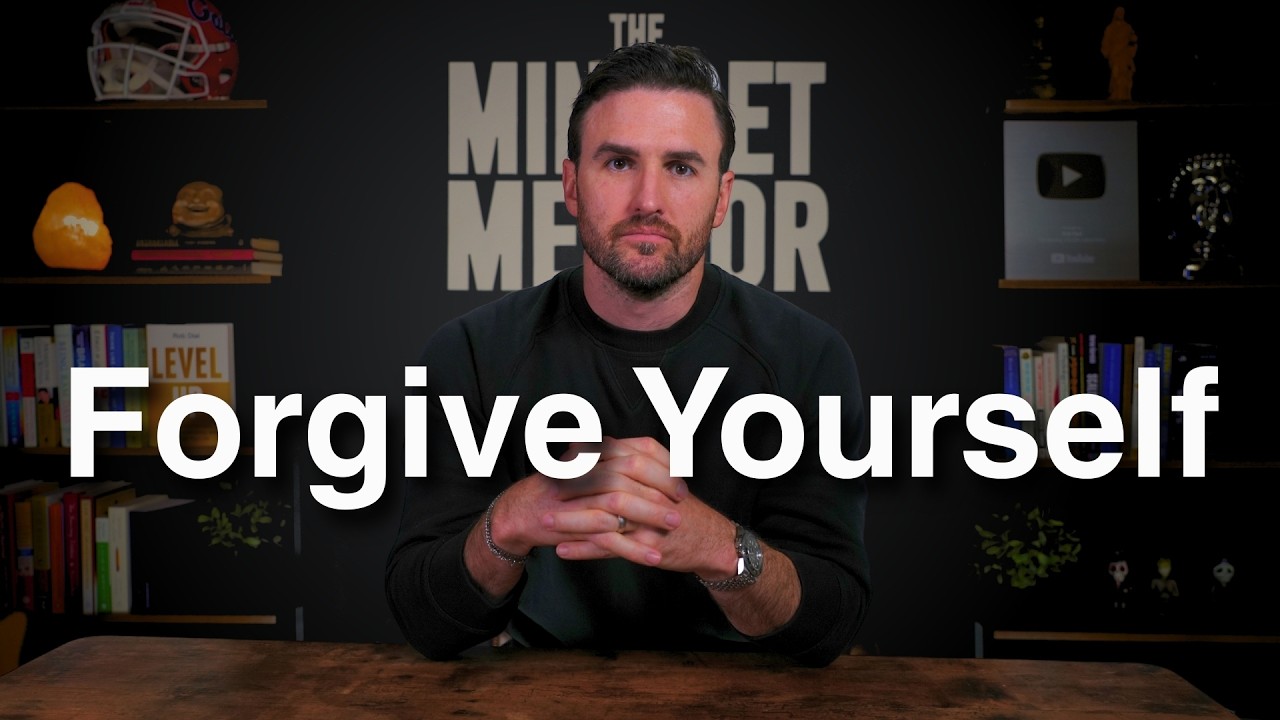
If this resonates, Sandeep Maheshwari's Hindi talk on learning from your mistakes rather than being buried by them is one of the most watched videos on this topic in India for a reason:
What This Childhood Mistake Taught Me About Character
That experience taught me something I have never found in any motivational book or self-improvement course: character is built in the small moments nobody sees.
Not in the big decisions where everyone is watching and the stakes are obvious. In the small ones. The decision to be honest when a lie would be easier. The decision to do the right thing when nobody would ever find out if you did not. The decision to respect the trust of people who have no reason to distrust you yet.
Those small, invisible choices accumulate into who you are. And who you are eventually becomes visible — whether you want it to or not.
I think about this often now. In my work as a developer, I make dozens of small decisions every day that affect projects, clients, and people I work with. Some of those decisions, nobody would notice if I cut corners. But the habit of cutting corners in private becomes the kind of person you are in public, eventually.
The boy who stole that phone did not think of himself as dishonest. He just made one small decision in a moment of weak judgment. That is how character erodes — not in dramatic moments of obvious temptation, but in quiet ones where it seems like it does not matter much.
It always matters.
Mistakes Cost More Than You Think — A Pattern I Later Recognised
That phone was probably worth a few hundred rupees. But the real cost of taking it was not measured in money.
I have thought about this a lot in the years since — especially as I have made other costly mistakes, though of very different kinds. Bad decisions have a way of costing more than their face value. The phone was a material cost. What it almost cost me — that family's respect, my mother's faith in me, my own sense of who I was — was far larger.
This is why I now think carefully before any significant decision, financial or otherwise. Not because I am afraid of being wrong. Because I know what it feels like to carry the weight of a preventable mistake, and I would rather do the uncomfortable work of thinking first.
It also connects to something I noticed in my financial life later: the impulse that made me take that phone — wanting something quickly, without thinking about consequence — is the same impulse behind every bad spending decision I have made since. The 30-Day Rule is the system I built to put a pause between that impulse and the action. It works for money the same way accountability works for character.
5 Life Lessons From One Childhood Mistake
1. Trust is genuinely fragile
It takes years to build and can disappear in a moment. The people who trusted you before will remember both versions of you — the trustworthy one and the one who broke it. Handle trust like it is the most valuable thing in any relationship, because it is.
2. Healthy guilt is a teacher, not a prison
The goal is not to drown in it, but not to escape it too quickly either. Let it sit long enough to ask what it is trying to show you. Then let it point you forward. Guilt that only looks backward is punishment. Guilt that looks forward is a compass.
3. Accountability is where growth actually begins
Not inspiration. Not motivation. Not good intentions. The moment you stop making excuses and say plainly — I did this, it was wrong, and I own it — that is the moment real change becomes possible.
4. Forgiveness can change a person more than punishment
Punishment can change behavior through fear. Forgiveness can change character through conscience. The second goes deeper and lasts longer. That family's response to being wronged was the most powerful lesson about personal growth I have ever received.
5. Your worst mistake is not your whole story
A mistake is a chapter. It does not have to become the book. The chapters that come after it are still yours to write, and they carry more weight than people usually realise.
What I Would Tell My Fourteen-Year-Old Self
I would not tell him to be perfect. That is not realistic advice for a fourteen-year-old or for anyone.
I would tell him this: the people who show you kindness when you least deserve it are giving you a gift that most people never receive. Do not waste it. Let it change you. Let the weight of what they chose to offer — forgiveness instead of punishment, grace instead of anger — become something you carry forward rather than something you set down and forget.
The family that forgave me did not just teach me about forgiveness. They taught me that people are capable of responding to wrongdoing in a way that actually makes the other person better. That is rare. And it planted something in me that I am still watering eight years later.
The Person That Mistake Helped Build
I have not gone back to visit that family yet.
One day I will. Not to re-open something that has already been healed, and not because I need closure for my own sake. But because I owe them something that cannot be paid in words — a kind of gratitude for the fact that their response to being wronged became one of the most formative moments of my life.
Without knowing it, they gave me a foundation. Their forgiveness became a standard I have tried — imperfectly, inconsistently, but genuinely — to hold myself to ever since.
One childhood mistake changed my life. Not quickly, not dramatically, not in a way that looked like anything from the outside. But slowly, year by year, choice by choice, in the quiet moments when nobody was watching.
And I am still becoming the person I want to be.
That is the only thing that actually matters.
Frequently Asked Questions
Can guilt actually help with personal growth?
Yes — but only the kind of guilt that points forward rather than backward. Guilt that keeps replaying a mistake without producing any change is just self-punishment. Guilt that asks what kind of person do I want to be next time? can genuinely reshape how you make decisions. The difference is whether you use it as a compass or a prison.
How do you forgive yourself for a serious past mistake?
Honestly, I think self-forgiveness comes from the work, not from the decision to forgive yourself. Accept clearly what happened. Make amends where you can. Then focus your energy on becoming the person who would not make that choice again. The forgiveness tends to follow the growth rather than precede it.
Why do childhood mistakes stay with us so vividly?
Because they often happen at the exact moment we are forming our understanding of who we are. A mistake at fourteen lands differently than the same mistake at thirty, because at fourteen you are still deciding what kind of person you will be. Those early defining moments get encoded deeply.
Is forgiveness really more powerful than punishment for personal growth?
In terms of lasting change — yes, often. Punishment can change behavior through fear, but fear fades when consequences fade. Forgiveness that genuinely reaches someone's conscience tends to produce more durable change, because it appeals to something internal rather than external. That said, not every situation calls for immediate forgiveness, and there is nothing wrong with needing time.
More from Veeresh
- 22 Years Old, -₹400 in My Bank Account, and Still Shipping Code — the financial chapter nobody in the startup world talks about honestly
- Working in a Startup But Dreaming of Building My Own — on purpose, patience, and playing a longer game
- The 30-Day Rule: The Only Spending Habit That Actually Changed My Life — the system I built after one too many decisions I later regretted
- Why Suffering Without Generational Wealth Hits Different — the honest financial reality of starting from zero as an Indian developer
Sometimes the mistakes we regret the most become the lessons that shape us the most. The goal isn't to erase the past. The goal is to grow because of it — and to let that growth show up in the small choices nobody else sees.
Did you find this helpful?